Tashkent’s Islamic Civilization Center Showcases Three Millennia of Heritage
The Islamic Civilization Center in Tashkent, Uzbekistan, offers a comprehensive look at nearly 3,000 years of regional history. Through modern interactive technologies, it documents the scientific, intellectual, and cultural contributions of Central Asian scholars.
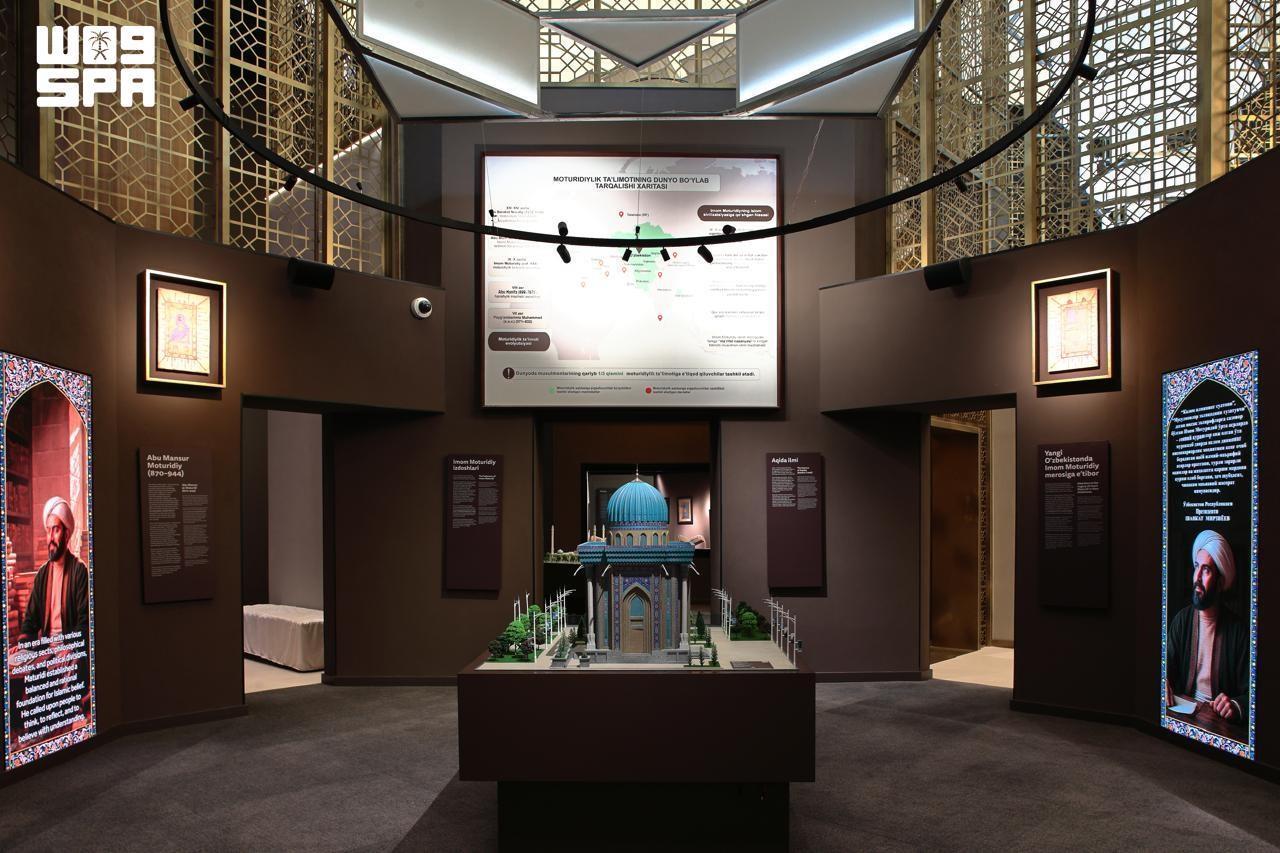
Spanning roughly 8,350 square meters, the exhibition hall is arranged chronologically into sections including "Pre-Islamic Heritage," "The First Renaissance," "The Second Renaissance," and "New Uzbekistan." Over the past year, the center has added more than 1,500 exhibits, including 800 ancient manuscripts, historical maps, and archaeological finds. International collaborations have also helped repatriate 743 original artifacts.
At the heart of the center is the Quran Hall, which houses the historic Uthmanic Quran. It also features a rare collection of illuminated manuscripts reflecting the evolution of Islamic calligraphy and ornamentation.
The chronological journey begins with archaeological discoveries in the "Pre-Islamic Heritage" wing and the "Wall of Civilizations and Discoveries." It then moves through the Renaissance eras, highlighting regional advances in mathematics, astronomy, medicine, literature, and architecture across cities such as Samarkand.
The "New Uzbekistan" gallery focuses on modern transformations. It incorporates 3D installations, digital archives, and interactive media to connect the region's historical foundations with contemporary progress.
The center also features a specialized research library, digital preservation and restoration laboratories, and extensive artifact repositories. Together, these resources create an immersive multimedia experience highlighting Central Asia's enduring contributions to global human civilization.