SAMA Governor Delivers Saudi Arabia’s Statement to IMFC
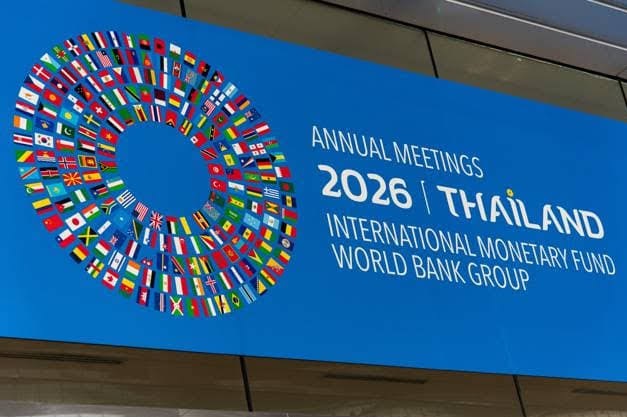
Governor of the Saudi Central Bank (SAMA) Ayman Al-Sayari delivered Saudi Arabia’s statement to the International Monetary and Financial Committee (IMFC) during the 2026 Annual Meetings of the World Bank Group and the International Monetary Fund (IMF) in Bangkok, Thailand.
The SAMA governor said Saudi Arabia welcomed the one-year extension of the IMFC chairmanship to sustain dialogue, bridge perspectives, and support consensus across the membership, pointing out that the Diriyah Guiding Principles provide a shared foundation for advancing the IMF’s governance reform. He added that the priority should now be to maintain momentum and translate these principles into practical progress through continued dialogue and consensus building, adding that the collective objective should be to achieve broadly acceptable outcomes that strengthen representation across the membership while preserving a strong, adequately resourced, and quota-based IMF.
Al-Sayari said: “We welcome the overall direction of the Managing Director’s Global Policy Agenda and its emphasis on credible policies, private sector-led growth, and international cooperation. The immediate priority is to preserve stability in these times of heightened uncertainty while avoiding policy responses that weaken medium-term growth or further erode buffers. At the same time, the increasingly differentiated impact of successive shocks reinforces the importance of policy advice that reflects members’ circumstances, exposures, and institutional capacity. With major reviews completed, the IMF has an important opportunity to translate institutional reform into more effective support for a membership facing mounting pressures.”
Al-Sayari said the conflict in the Middle East is continuing to weigh on the global outlook, at a time when the world economy was already navigating a difficult global environment, characterized by high uncertainty, elevated debt, and limited policy space. Its initial effects were concentrated on energy and major shipping routes. They are now transmitting more broadly through trade, transport, inflation, financing capacity, and confidence. As the effects of the conflict broaden, resilience has so far helped contain their impact, but countries’ capacity to absorb further shocks remains uneven and constrained, which could make it harder to sustain medium-term resilience. In this environment, the IMF’s role remains essential to fostering effective multilateralism and international cooperation, while supporting members through even-handed surveillance, country-specific policy advice, and tailored capacity development.
He stressed that monetary policy should safeguard price stability and respond to the source and persistence of price pressures, consistent with each country’s monetary and exchange rate framework, avoiding overreaction to temporary supply-driven increases while responding firmly when inflation pressures increase or threaten to unanchor inflation expectations. He added that fiscal policy should address debt and refinancing vulnerabilities and rebuild buffers while preserving productive investment and targeted support for the most affected households.
Al-Sayari said: "Financial regulation and supervision should strengthen resilience to shocks from interconnected liquidity, leverage, and funding risks, supported by consistent implementation of agreed international standards. As artificial intelligence (AI) and digital finance evolve, policymakers should seek to harness the benefits of innovation where appropriate, while safeguarding financial and operational resilience, including cyber resilience, and calibrating oversight to the relevant sources and transmission channels of risk. Structural reforms should raise productivity, increase potential growth, broaden the revenue base, improve spending efficiency and crowd in private investment. Strong multilateral cooperation will be important to manage spillovers that domestic policies alone cannot contain."
He affirmed that the Saudi economy remains resilient in the face of the ongoing conflict in the Middle East and continues to navigate exceptional regional uncertainty from a position of strength, supported by prudent policy frameworks, substantial fiscal and non-fiscal buffers, and the institutional capacity to respond swiftly and coherently.
"A well-capitalized and liquid banking system and forward-looking macroprudential policy provide a strong foundation for financial resilience. Financial soundness indicators remain among the strongest in the region, asset quality has improved, liquidity remains strong, and stress tests confirm the banking system’s capacity to withstand severe shocks. Decades of prudent economic and risk management and strategic investment have helped preserve domestic stability," the SAMA governor said.
In closing, he said that Saudi Vision 2030 has reinforced Saudi Arabia’s economic foundations by broadening the non-oil economy, expanding private sector participation, and strengthening institutions and implementation capacity. Saudi Arabia remains committed to advancing this transformation through reforms that raise productivity and expand opportunities for private investment, while safeguarding fiscal sustainability and improving spending efficiency. The Kingdom’s policies will continue to respond flexibly to evolving conditions while remaining firmly anchored in its long-term development objectives.