The Custodian of the Two Holy Mosques Chairs Cabinet Session in Jeddah
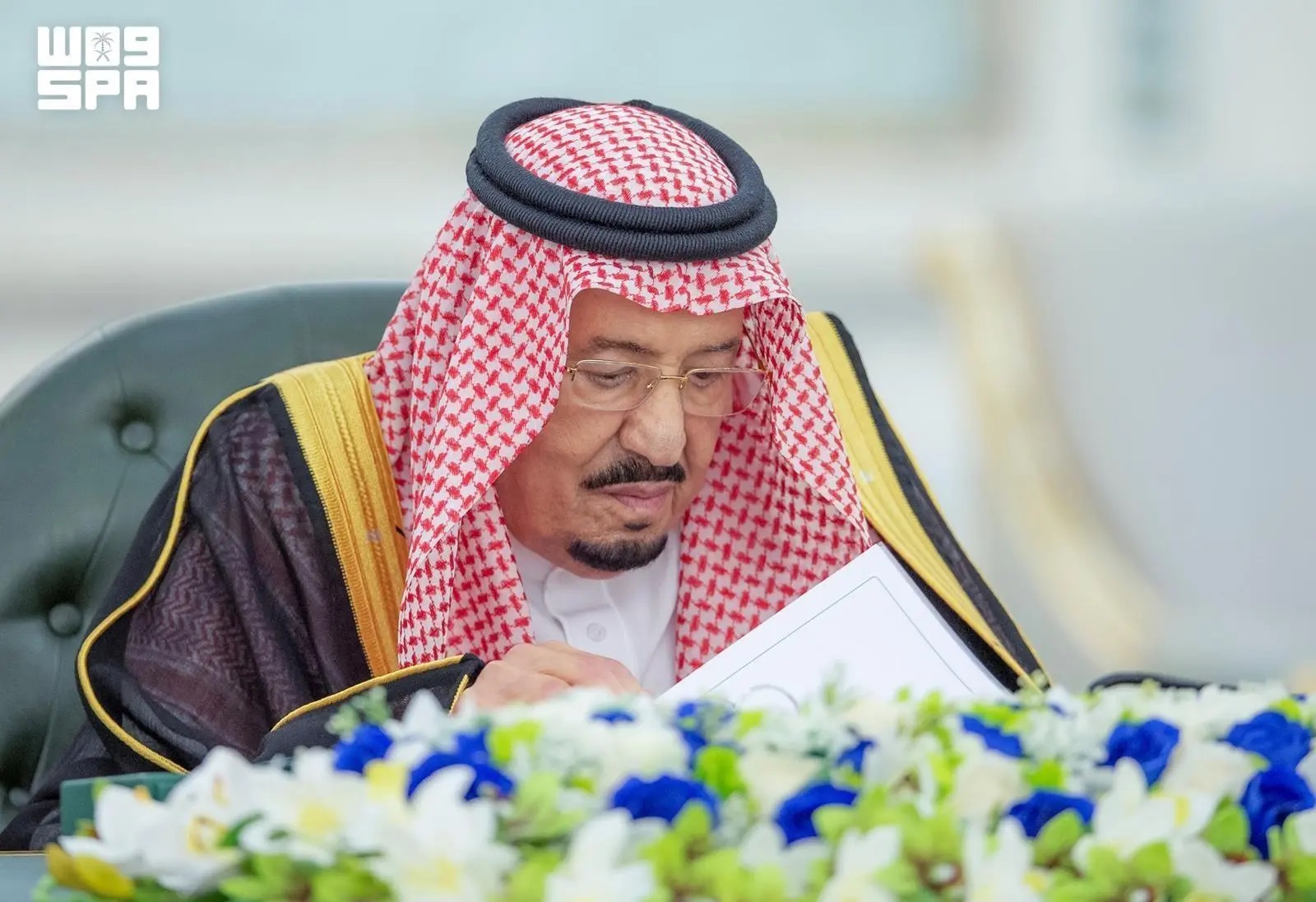
Custodian of the Two Holy Mosques King Salman bin Abdulaziz Al Saud chaired the Cabinet session held today in Jeddah.
The Cabinet was briefed on the phone call received by His Royal Highness Prince Mohammed bin Salman bin Abdulaziz Al Saud, Crown Prince and Prime Minister, from Lebanese President Joseph Aoun, who expressed appreciation for Saudi Arabia's support and efforts to promote regional peace and stability.
The Cabinet monitored regional developments and their repercussions for international peace and security, strongly condemning the baseless claims and false accusations—devoid of any foundation—made by the terrorist Houthi militia, along with the militia's involvement in regional conflict to advance its sinister agenda and objectives. These actions have exacerbated the suffering of the Yemeni people and threatened regional security and stability. The Cabinet reaffirmed Saudi Arabia’s continued support for the Yemeni people and their legitimate government, as well as its commitment to taking firm measures to protect its security and vessels in accordance with international law and the 1982 United Nations Convention on the Law of the Sea.
Reiterating Saudi Arabia's solidarity and full support for Kuwait, Bahrain, and Jordan, it backed the measures taken by these nations against blatant Iranian aggression that violates international law and good neighborliness principles. The Cabinet further emphasized the necessity of an immediate halt to all military escalation to safeguard the stability of the region's countries and their populations.
Following the session, Minister of Human Resources and Social Development and Acting Minister of Media Ahmed Al-Rajhi stated to the Saudi Press Agency that the Cabinet discussed the outcomes of the Kingdom's active international participation. It praised joint national efforts during the 2026 UN High-Level Political Forum and noted progress in the third Voluntary National Review report, which highlighted advancements in Sustainable Development Goals, including water security, renewable energy, healthcare access, digital government, industrial development, and inclusive economic growth.
The Cabinet also addressed discussions from the High-level Meeting of the UN General Assembly on the New Urban Agenda, highlighting the Kingdom's achievements in creating sustainable cities and enhancing quality of life. These milestones include higher homeownership rates among Saudi families, an increased per capita share of public spaces, a modernized transportation system, and expanded community involvement in the urban development process.
The Cabinet reviewed a range of reports, statistics, and indicators related to the national economy and the positive impact of the Kingdom's reforms and policies on economic growth, including the recent stability of the annual inflation rate at 1.8%, which remains low compared with many advanced and emerging economies.
The Cabinet also praised the Kingdom's rise to 13th place globally among the largest recipients of foreign direct investment (FDI) in 2025, according to the United Nations Conference on Trade and Development (UNCTAD). The Cabinet affirmed that the achievement reflects Saudi Arabia's growing position as a leading global investment destination, the success of its economic reforms, and increasing investor confidence, supported by a 53% rise in net FDI inflows to $32.6 billion and the competitiveness of key sectors, including energy, infrastructure, technology, advanced industries, and logistics.
The Cabinet addressed items on its agenda and issued several decisions, including the following:
First:
Authorizing the minister of interior, or a deputy, to discuss and sign a draft memorandum of understanding for scientific, training, and research activities with the Maldives Police Service.
Second:
Authorizing the minister of foreign affairs, or a deputy, to discuss and sign a draft memorandum of understanding on political consultations with the Department of Foreign Affairs and Trade of Australia.
Third:
Authorizing the minister of culture and chairman of the board of directors of the Museums Commission, or a deputy, to discuss and sign a draft memorandum of understanding for cooperation in museums between the authority and the Department of Antiquities of Jordan.
Fourth:
Authorizing the minister of commerce and chairman of the board of directors of the Saudi Standards, Metrology and Quality Organization, or a deputy, to discuss and sign a draft memorandum of understanding for cooperation in technical barriers to trade between the organization and the State Administration for Market Regulation of the People's Republic of China.
Fifth:
Approving a memorandum of understanding between the Saudi Arabia Financial Investigations Unit at the Presidency of State Security and the Ethiopian Financial Intelligence Service for cooperation in the exchange of information on anti-money laundering, related crimes, and terrorism financing.
Sixth:
Approving a memorandum of understanding on cooperation in the peaceful use of outer space between the Saudi Space Agency and the United Nations.
Seventh:
Approving a memorandum of understanding between the Saudi National Center for Non-Profit Sector and the Qatari Regulatory Authority for Charitable Activities on cooperation in the non-profit sector.