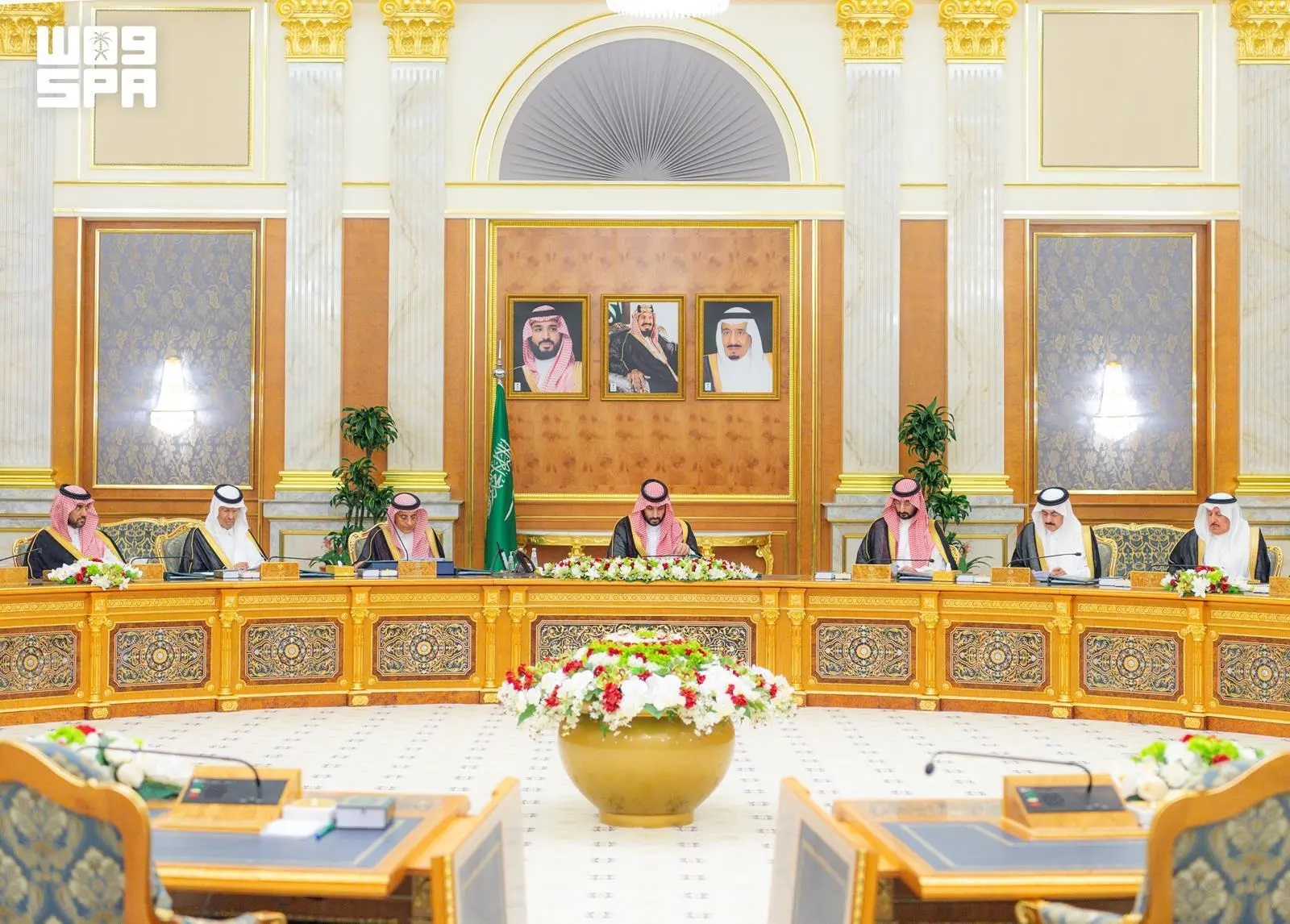
HRH the Crown Prince Chairs Cabinet Session in Jeddah
His Royal Highness Prince Mohammed bin Salman bin Abdulaziz Al Saud, Crown Prince and Prime Minister, chaired the Cabinet session held today in Jeddah.
HRH the Crown Prince briefed the Cabinet on the contents of the phone calls he held with Amir of Kuwait Sheikh Mishal Al-Ahmad Al-Jaber Al-Sabah, Prime Minister of Pakistan Muhammad Shehbaz Sharif, and UK Prime Minister Andy Burnham, during which they addressed the latest regional developments and ongoing efforts to enhance regional security and stability.
The Cabinet strongly condemned the attacks by Iranian-backed terrorist militias in Yemen and Iraq on oil facilities in Riyadh and Eastern regions and on commercial vessels in the Red Sea, stressing that Saudi Arabia will not tolerate any infringement on its security, interests, and national assets, and will respond firmly to any hostile acts in accordance with the provisions of international humanitarian law, its customary rules, and the principle of proportionality.
The Cabinet called on the Iraqi government to take all necessary measures to prevent its territory from being used as a launchpad for aggression, while expressing appreciation for the positions of countries worldwide and international organizations that condemned the criminal attacks, which the Saudi air defenses intercepted with full efficiency and capability.
In a statement to the Saudi Press Agency following the session, Minister of Education and Acting Minister of Media Yousef Al-Benyan said the Cabinet reviewed Saudi Arabia's ongoing efforts, through dialogue and consultation with friendly countries, to de-escalate and contain regional tensions, safeguard waterways in the Arabian Gulf and the Red Sea, and foster regional and international stability.
The Cabinet affirmed the Kingdom's keenness to consolidate the approach of dialogue and diplomacy and strengthen joint international action, particularly as the region undergoes a pivotal phase requiring the establishment of a regional order based on commitment to the fundamental principles enshrined in the United Nations Charter, foremost among them safeguarding state sovereignty, non-interference in internal affairs, good neighborliness, freedom of navigation, and compliance with international law.
On the domestic front, the Cabinet addressed overall state affairs, particularly regarding the continued enhancement of sector and agency performance and the improvement of services provided to citizens, while continuing to issue laws and decisions aligned with desired aspirations. These include the enactment of the General Education Law, which will mark a transformation in the sector's development and governance, provide the enablers needed to reach its targets, elevate the quality of the educational environment and its outcomes, and regulate the role of the private and non-profit sectors to achieve the goals of Saudi Vision 2030.
The Cabinet praised the Quality of Life Program for achieving results that exceeded the economic and developmental targets set for its strategic initiatives, maintaining its growing contribution to non-oil GDP, developing services across all cities, and propelling the culture, sports, entertainment, and tourism sectors toward new horizons that have strengthened the Kingdom's standing as a globally attractive destination.
The Cabinet commended the Kingdom's attainment of first place regionally for the fourth consecutive year in the Government Electronic and Mobile Services Maturity Index, issued by the United Nations Economic and Social Commission for Western Asia—an extension of its achievements in relevant international indices and a reflection of continuous progress in developing procedures and platforms, adopting emerging technologies and artificial intelligence, and consolidating a global model in business practice and digital economy competitiveness.
The Cabinet addressed items on its agenda and issued several decisions, including the following:
First:
Approving an agreement between the governments of the Kingdom of Saudi Arabia and the Arab Republic of Egypt on mutual exemption from short-stay visa requirements for holders of diplomatic and special passports.
Second:
Approving a memorandum of understanding on science, technology, and innovation between the governments of the Kingdom of Saudi Arabia and the State of Kuwait.
Third:
Authorizing the minister of environment, water and agriculture, or a deputy, to discuss and sign a draft memorandum of understanding on agricultural cooperation with the Syrian Ministry of Agriculture and Agrarian Reform.
Fourth:
Authorizing the minister of environment, water and agriculture and chairman of the board of directors of the National Center for the Prevention and Control of Plants Pests and Animal Diseases, or a deputy, to discuss and sign a draft agreement on cooperation in plant health between the center and the Near East and North Africa Plant Protection Organization.
Fifth:
Approving a memorandum of understanding on cooperation in food security between the Saudi General Food Security Authority and the Qatari Ministry of Municipality.
Sixth:
Approving the designation of 2027 as the Year of Water.